
Past Passive Voice
Level Seven
Lesson 75
The past passive voice is formed this way:
was or were + past participle
The verb “be,” was or were, determines the verb tense. The verb “be” matches the tense. It also must match the subject, singular or plural. The main verb is in the form of a past participle.
- Hector was paid on Friday.
- The concert was held in an outdoor ampitheater.
- The workers were trained to use the equipment properly.
- Was the package delivered on time?
- The corn wasn’t planted early this year. It was planted late.
The past passive voice is obviously in the past. The helping verb in this case (was or were) clearly indicates that.
After you finish the lesson, take Quiz #75 – past passive voice.

The food was cooked in a wok. (a Chinese frying pan)
75a. past passive
was or were + past participle
past passive voice
- You were told not to do that.
- The bike was fixed in less than a week.
- New computers were made available to all of the students.
All of the sentences above are in the past tense. Let’s see what the verbs in these sentences look like in the present active voice
past active voice
- The teacher told you not to do that.
- The bike shop fixed the bike in less than a week.
- The school made new computers available to all of the students.
What are the differences between the verbs in the passive voice, and the verbs in the active voice? Sometimes they look exactly the same. The difference is that the main verbs in the passive voice are past participles. The main verbs in the active voice are in the simple past. As you can in the table below, they look exactly the same.
| Simple Form | Past Tense | Past Participle |
|---|---|---|
| tell | told | told |
| fix | fixed | fixed |
| make | made | made |
75a. past passive
The main verb in the sentences below is in the form of a past participle. The verb “be” indicates the verb tense. The subject in each sentence does not do anything.

Sunflowers are grown for their seeds and their beauty.
Who grows the sunflowers? The person who does the work is not identified.
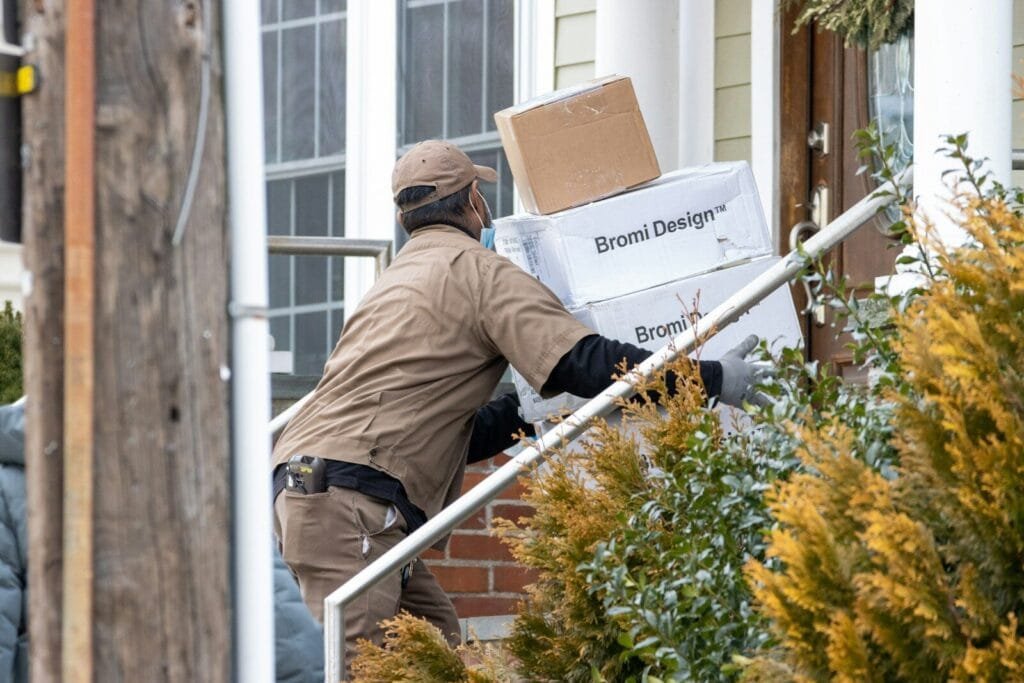
Packages are delivered to the front door of the house.
Who delivers the packages? We can see someone in the image, but in the sentence, the person who does the work is not identified.
The subject in each sentence does not perform any sort of action. The action is performed by a person, but as you can see the person is not mentioned. This is one of the benefits to using the passive voice.
75b. past passive -- negative
was or were + not + past participle
singular
I was not paid
You were not paid
He was not paid
She was not paid
It was not paid
plural
We were not paid.
You were not paid.
They were not paid.
pay / paid / paid
To make the negative in the past passive voice, you only need to add “not” after the helping verb, was or were. In spoken English, most people use contractions: wasn’t or weren’t.
- The workers weren’t paid on time.
- The child wasn’t born in Mexico.
- The luggage wasn’t carefully checked at the airport.
75b. past passive -- negative

The meeting wasn’t attended by the entire staff.
helping verb: was + not = wasn’t
main verb: attended
attend / attend / attended
75b. past passive -- questions
was or were + S + past participle
singular
Was I stopped?
Were you stopped?
Was he stopped?
Was she stopped?
Was it stopped?
plural
Were we stopped?
Were you stopped?
Were they stopped?
stop / stopped / stopped
When making questions, the helping verb (was or were) goes before the subject (S).
- Was he stopped by a police officer?
- Were you born in the United States?
- Was your flight delayed?
75b. past passive -- questions
Was the meeting attended by the entire staff.
helping verb: was + not = wasn’t
main verb: attended
attend / attend / attended
75d. past passive practice
was or were + past participle
- The house was built by the homeowner.
- The house was built in just six months.
- It was built with lumber and bricks.
Who built the house? The homeowner built the house. However, in the second sentence, the homeowner is not mentioned, so we don’t really know who built it. In the third sentence, we know what the materials were to make the house but not who built it. Remember, the passive voice can be very helpful when talking about situations in which you don’t know who did the action.
In the following sentences, the verb “be” is in the past tense. It matches the subject. The main verb is in the form of a past participle.
- 1. We were cheated by the company that sold us the refrigerator.
- 2. Troops were sent to the area to help provide safety and order.
- 3. The table was set for four people to have dinner.
You need to answer these questions:
- What is the helping verb in sentence 1?
- What is the main verb in sentence 2?
- Who set the table? Do we know?
Write the answers to these questions in your notebook. You can check your answers in the next section. ➡️
75d. past passive practice

We were cheated by the company that sold us the refrigerator.
helping verb: were (past tense)
main verb: cheated
cheated / cheated / cheated

Troops were sent to the area to help provide safety and order.
helping verb: were (past tense)
main verb: sent
send / sent / sent

The table was set for four people to have dinner.
helping verb: was (past tense)
main verb: set
set / set / set
Take Quiz #75 – past passive voice by clicking on the link.