
quit
To quit something is to stop doing it. This is an irregular verb:
quit / quit / quit.
- Marta quit her job.
- Oscar is trying to quit smoking.
- It’s hard for people to quit their habits.
- If you can’t do something, don’t quit right away.
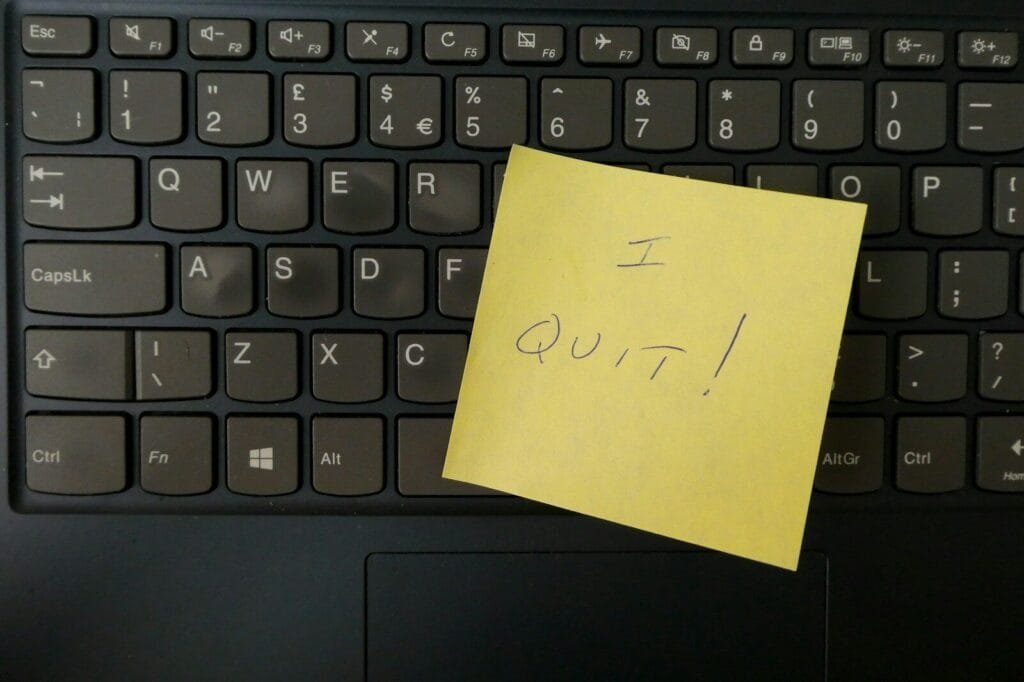
- I quit!
She quit her job.
a. quit = stop doing an activity
A person who quits something decides that there is a good reason to stop. These reasons include physical and mental health and personal safey. This is an irregular verb: quit / quit / quit.
- I’m trying to quit eating at night.
- Harold quit his job last year.
- Theresa would love to quit her job, but she’s afraid she won’t be able to find a new job.
- Please, quit making that noise.
- Quit doing that!
- Quit it! (Stop!)
- You should quit while you’re ahead. (This is an expression. It means to stop now before something goes wrong or you make a mistake.)
- My cell phone quit on me. (quit on ____ = stop working)
- The boys don’t want to quit yet. They want to continue playing.
- You should never quit trying.
- Once you quit, you’re finished.
- Don’t quit!
a. quit = stop doing an activity

- I have to quit eating so much sugar.
- Quit talking about it and just do it!
Notice that the word “quit” is often followed by a gerund.

- She refused to quit the guitar.
- She refused to quit playing the guitar.
- She refused to quit, and now she’s quite good at it.
b. other ways to use "quit"
There are a few different ways to use “quit” as a noun. A quitter is a person who quits; the word “quits” refers to a situation that a person stops doing.
- They’re calling it quits for the day. (call it quits = to stop for a period of time)
- Let’s call it quits.
- Jeremy has a reputation as a quitter. (quitter = a person who quits)
- Quitters never win, and winners never quit.
- Don’t be a quitter. Keep trying!
b. other ways to use "quit"

call it quits = stop working
- He’s calling it quits for the day and heading home.
- What time do you usually call it quits?