
dig
We dig in the ground. We use shovels, big machines, or our hands to move the earth for a purpose. Or we dig because it’s fun. Whatever the reason, digging is something most animals and people know how to do.
- When I was a kid, I enjoyed digging in the dirt.
- To plant a tree, dig a hole in the ground and put it in.
- Prospectors dig for gold and other valuable minerals.
- An excavator dug a huge hole for a local construction project.
- I’m not digging this new software. (This is an example of slang in which “dig” means to like something: not + dig = don’t like)
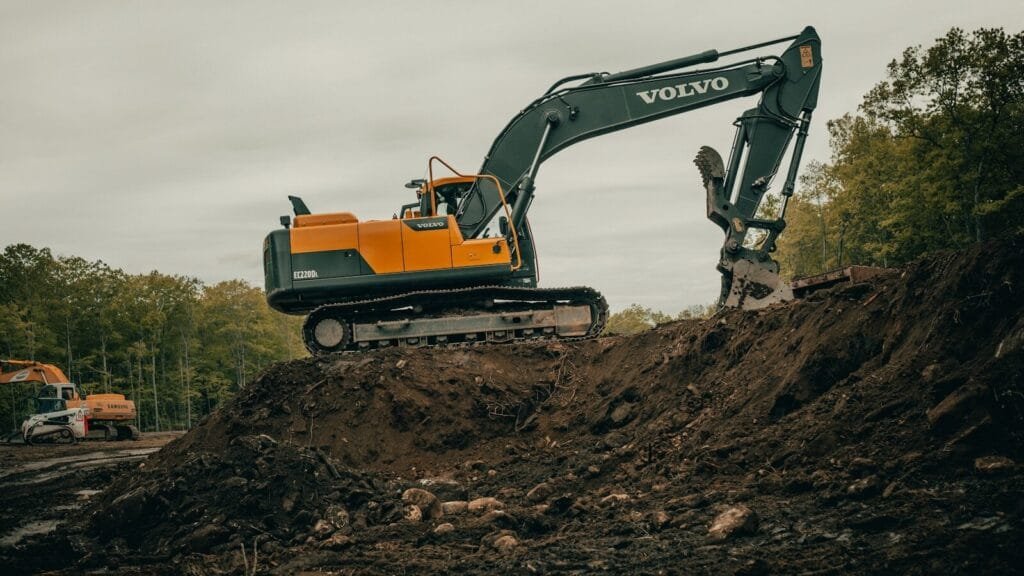
Machines help people dig.
a. dig = to excavate or move dirt
It’s necessary to dig when preparing soil for some purpose such as planting and building things.
- Digging is a natural activity.
- Children like to dig in the dirt.
- When we go to the beach, my kids enjoy digging in the sand.
- If you dig far enough, you’ll reach China. (This is something people here in the U.S. say–of course, it’s a joke.)
- How far down can you dig by hand?
- For large digging projects, it’s usually necessary to use an excavator.
- Archaeological digs may uncover evidence of human activity from thousands of years ago. (The word “dig” is a noun in this sentence.)
- Many different kinds of animals dig holes in the ground.
- Dogs dig holes.
- Squirrels also dig holes.
- Some kind of animal dug holes in my backyard last year and ruined my gardens.
dig / dug / dug
Note: You might hear the word “digged” for the past tense or for the past participle, but I think the form you see above sounds better and it’s more common.
a. dig = to excavate or move dirt
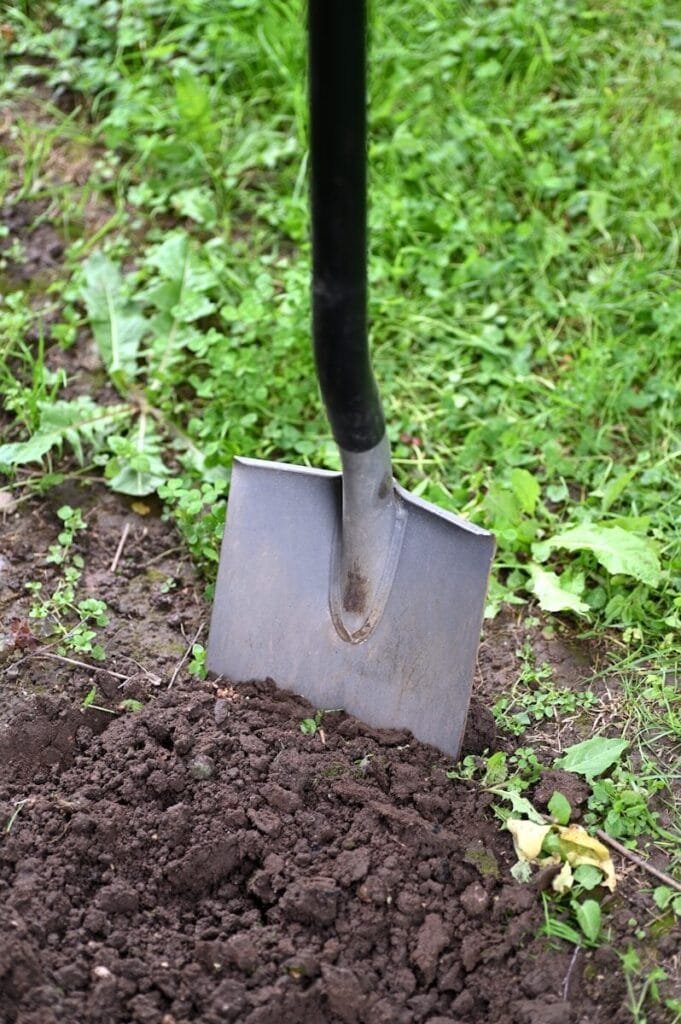
- People use a shovel for digging in the soil.
- You can also dig with your hands, but it’s easier to dig with a shovel.
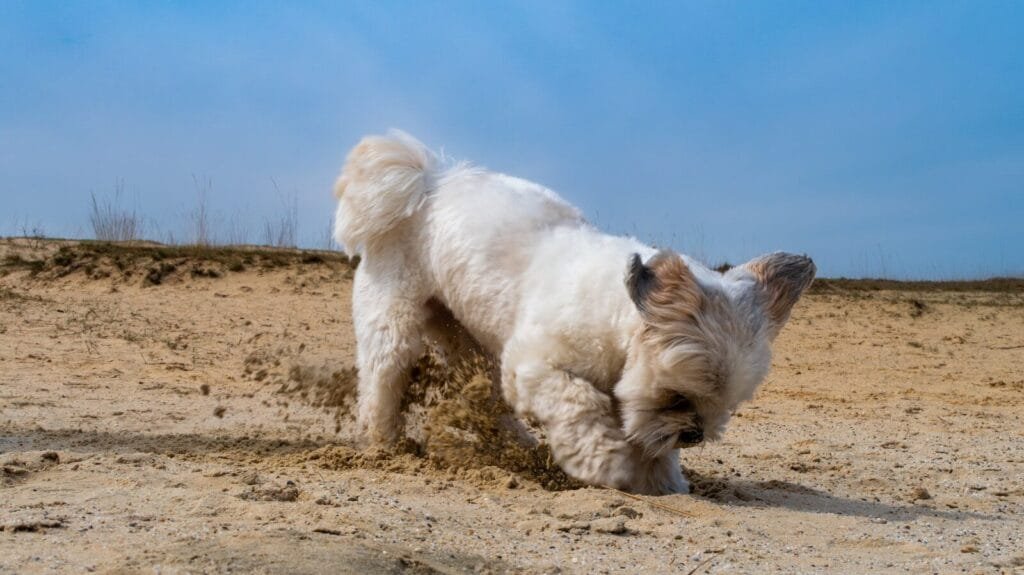
- The little dog is digging a hole in the sand.
b. dig = try to get something
A person who digs might also be looking for something.
- I need to dig through my socks to find a pair that matches.
- Eleanor dug through his closet to look for something to wear for school.
- If you dig far enough into his past, you’ll probably discover that he did something he’s not proud of.
- Politicians often try to dig up negative information on their opponents in order to win elections. (dig up = try to find information)
- If you did deeply enough into this novel, you’ll find many interesting observations about life during the early 20th century.
b. dig = try to get something

- She’s digging through her closet to find something to wear.
c. miscellaneous uses and slang
As a part of a phrasal verb or as slang, the word “dig” has a few different meanings.
- Are you hungry? Dig in. (dig in = eat what you want)
- People really dig this beautiful old apartment building. (dig = like)
- Harold said something that was intended as a dig against his roommate. (a dig = a critical remark)
- Do you dig? (Do you understand what I’m saying?)
c. miscellaneous uses and slang

- Rahmo and Ali really dig their new apartment in Chicago. (dig = like a lot)
- They also dig the neighborhood because it has everything that they need.
First published on September 25, 2025