
jump
When something jumps, it moves suddenly upward or downward. We often use jump when a person or thing increases quickly. The most common use is to describe a person or animal moving upward off the ground. But we can also use jump to describe a sudden change in a number, amount, price, or level.
- The children are jumping on their beds.
- George can jump very high.
- A deer jumped into our backyard. It jumped over the fence.
- The population of the city jumped from 2,300 to 5,000 in less than five years.
- Recently prices for food have jumped very quickly.
- If you see any good deals, you have to jump on them fast.
Jump
a. Use "jump" as a verb.
“Jump” express and sudden movement upward, but it can also be downward.
- Children love to jump up and down.
- My dog can jump over the fence in our backyard.
- An athlete can jump very high.
- How high can you jump?
When there is upward movement to a new level, you might be able to use “jump.”
- The stock market jumped quickly today when it was announced that interest rates were decreasing.
- There has been quite a big jump in the price of gasoline over the last six months.
a. Use "jump" as a verb.

- They jumped from the plane.
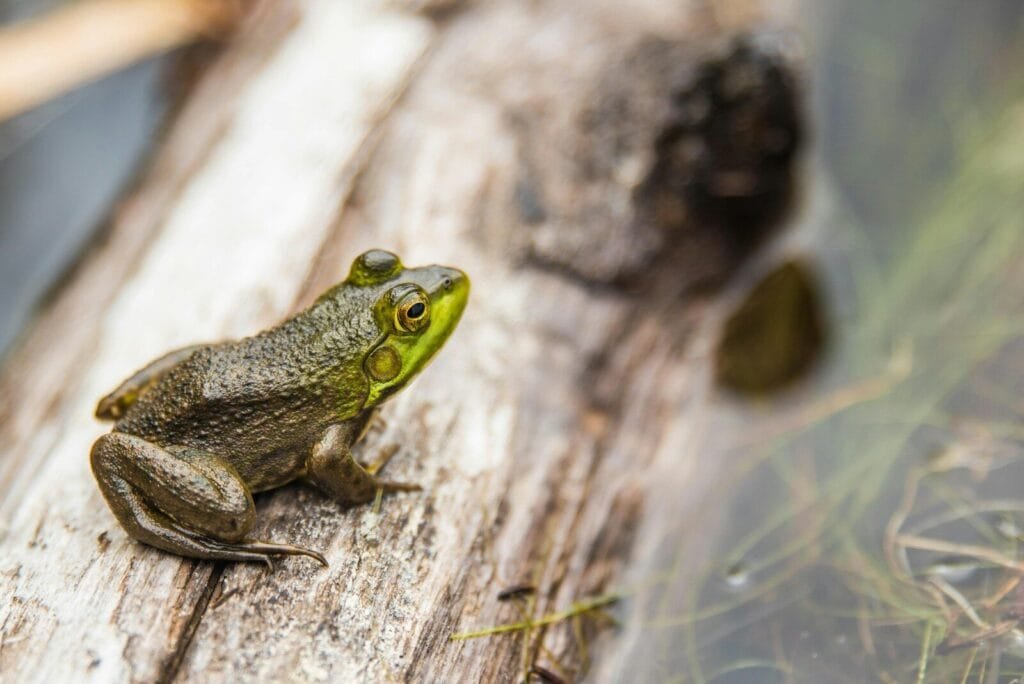
- Frogs hop and jump from one place to another.
- This frog looks like he’s ready to jump.
b. Use "jump" as a noun.
When used as a noun, “jump” is used for movement, but it is also used for sudden changes in a condition or a situation.
- That was a big jump!
- Skateboarders can make jumps using their skateboard.
- The boy made a jump into the air.
- The horse easily cleared the jump. (jump = hurdle)
- A big jump in sales during November helped the company meet it goals for the year.
- The long jump and the high jump are popular events in track and field.
- You need to get a jump on the competition in order to succeed. (In this sentence a jump is some sort of advantage.)
b. Use "jump" as a noun.

- Vanessa and Tony made a big jump by moving to Minneapolis. They used to live in a small town.

- She made a big jump into the air.