
cook
A person who cooks something makes food. This usually requires some kind of heat. It also requires pots, pans, and utensils such as knives, spoons, and spatulas. Some people like to cook; others hate it.
- Do you like to cook?
- We cooked dinner last night.
- Maria can cook many different things.
- Ali would like to learn how to cook.
- What are some things that you know how to cook?
cook / cooked / cooked / cooking
a. cook = make food
This word is often used as a verb for the action of making food:
cook / cooked / cooked / cooking
This verb can be followed by an object (transitive) or not (intransitive).
- Maria cooks food almost every day. (transitive: The object is “food.”)
- Brian doesn’t cook. (intransitive: There’s no object.)
- Food cooks on a stove. (When the food is the subject, there is not a direct object, so “cook” in this sentence is intransitive. Instead, you can use a prepositional phrase.)
- A turkey is cooking in the oven. (turkey = food. S + V + no object.)
- You can cook food in an oven. (S + V + O)
- I like to cook. (to cook = infinitive)
- I enjoy cooking. (cooking = gerund)
- There’s something cooking in the oven. (A thing is being cooked.)
- There’s someone cooking in the kitchen. (A person is doing some work—cooking. The person is not being cooked!)
a. cook = make food

- There’s something cooking on the stove.
- The food is cooking.
- Food cooks on a stove.
Note: You can use “cook” as a verb for things or people.

- They enjoy cooking.
- They both like to cook.
- She cooked dinner, and he helped her.
b. cook = a person who cooks
The word “cook” is also used for a person’s occupation. Don’t say “cooker!”)
- She’s a cook. (This is her job or career)
- She works as a cook.
- She has been a cook for the last 20 years.
- My mother was a good cook. (This means that she had great talent when making food for her family, not for a business.)
- Are you a good cook? (Do you know how to cook food?)
- I consider myself a pretty good cook. (I think I know how to do it, but I’m still an amateur.)
- My friend, Neal, works as a short order cook at a diner. (A short order cook is someone who makes simple food fast.)
Note: Don’t say a person is a “cooker.” That is never correct!
b. cook = a person who cooks
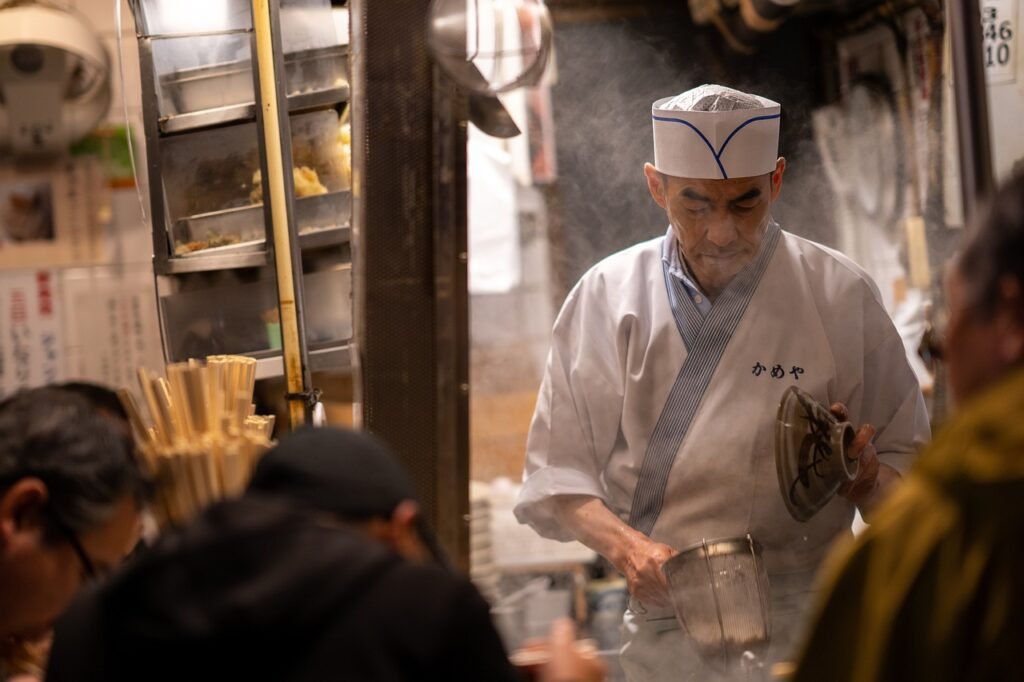
- He works as a cook. (or)
- He works as a chef.
What is the difference between a cook and a chef? A chef usually has some formal education or training and is more highly skilled than a cook.

- He’s a short order cook.
- A short order cook can make food very quickly.
- He’s not a chef.
c. expressions that use "cook"
Some common expressions and well-known sayings include the word “cook.”
- What’s cooking? (What’s happening? What’s going on?)
- They’re cooking up some ideas. (cook up = think or plan to do)
- That company got caught cooking the books, and now it’s going to have to pay a heavy penalty to the government. (cook the books = to use illegal or unethical accounting practices)
- His goose is cooked. (He’s in big trouble.)
- Too many cooks spoil the soup. (This is a proverb that means too many people involved in one activity or in decision-making will cause problems for the result.)
- Martha is cooking up a storm in the kitchen in preparation for the holidays. (cook up a storm = cook large amounts of food)
- Now we’re cooking with gas. (Now we are doing really well.)
c. expressions that use "cook"

- They’re cooking up new ideas and new layouts for their website.

- Sometimes it’s hard to make a good decision when so many people are involved in the process. Too many cooks spoil the soup.
First published on November 8, 2025