
against
The word “against” is a common preposition in English. Use this word when talking about opposition or dislike, when describing the placement of an object right next to another object, and when showing contrasts.
- They are against the war in Iran. (opposition)
- Jose is against all forms of violence. (dislike)
- The man is standing against the wall. (placement next to)
- Put that against the side of house. (next to)
- When the color blue is placed against white, it has a pleasing effect. (contrast)
- The full moon stands out against the dark sky. (contrast)
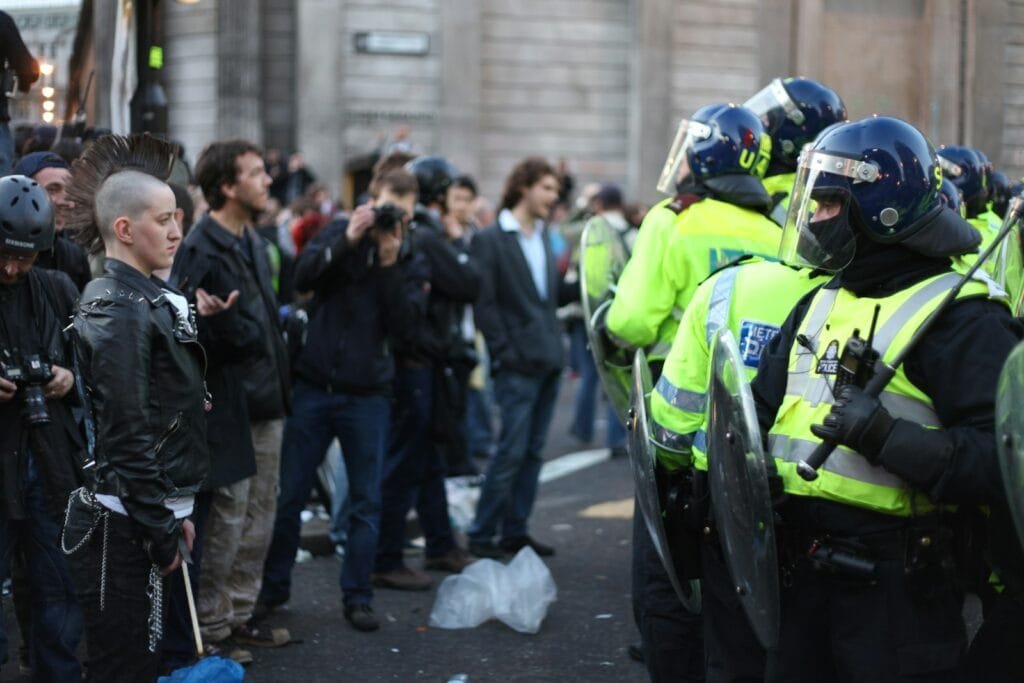
These protestors are against police brutality.
a. against = in opposition
A person who feels very strongly about a particular person or issue is against it, him, her, them, etc.
- Maria is against the use of leaf blowers because they are so noisy.
- Jeet is very against bullying. Why are people so mean?
- What are you against?
- Do you have anything against people with tattoos?
- Vanessa doesn’t know if she’s for or against the city’s plans for a new fire station near her home. (The preposition “for” is the opposite of “against” in this example.)
- Judy thinks her boss is plotting against her. She thinks she’ll lose her job.
- Ren thinks the teacher has something against him, but it’s probably just his imagination.
a. against = in opposition
b. against rules and laws
If a person does something that is against the law or against the rules, there may be consequences.
- You can’t do that. It’s against the law.
- Smoking in public buildings is against the law.
- Roy was fired because he did something that was against the rules.
- Excessive speeding is dangerous, and it’s against the law.
- In our version of the game Monopoly, we allow some things that are against the rules, such as how much money is allowed into the game.
- A swimmer who ignored the regulations for the use of the public beach was asked to leave and never return.
b. against rules and laws
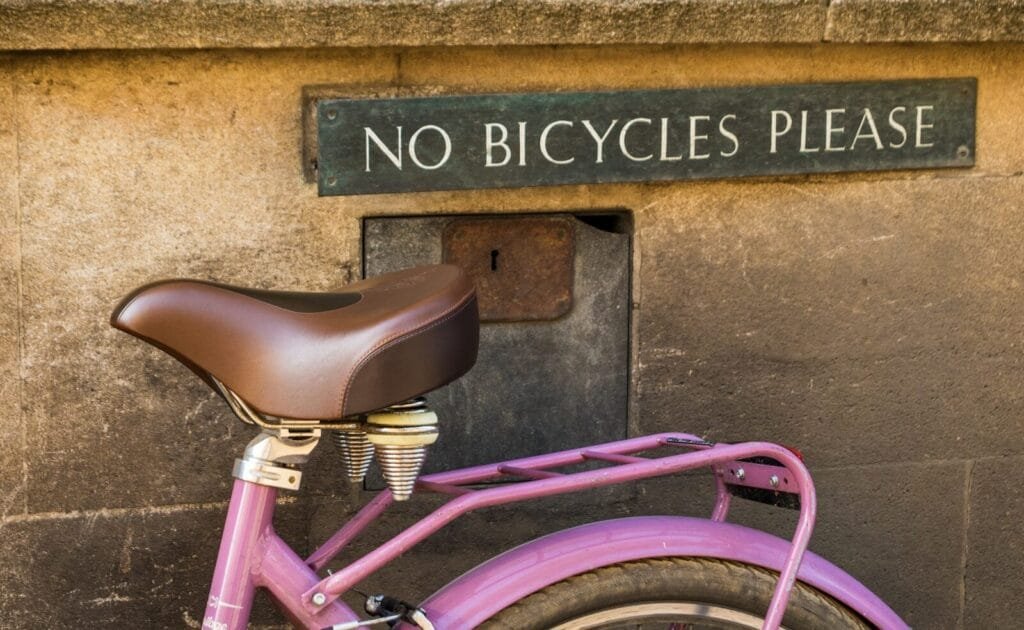
- It’s against the rules to put your bicycle here.

- It’s against the law to hunt ouf of season.
c. against = next to; force
When a thing is leaning or touching another thing, the preposition “against” may be used.
- The desk is right up against the wall.
- The police officer told the suspect to stand against the car.
- There is some lumber leaning against the fence.
- Push against the door to open it.
- I’m storing some lumber against the side of my house.
- If they put too much weight against the building, it might collapse.
c. against = next to; force
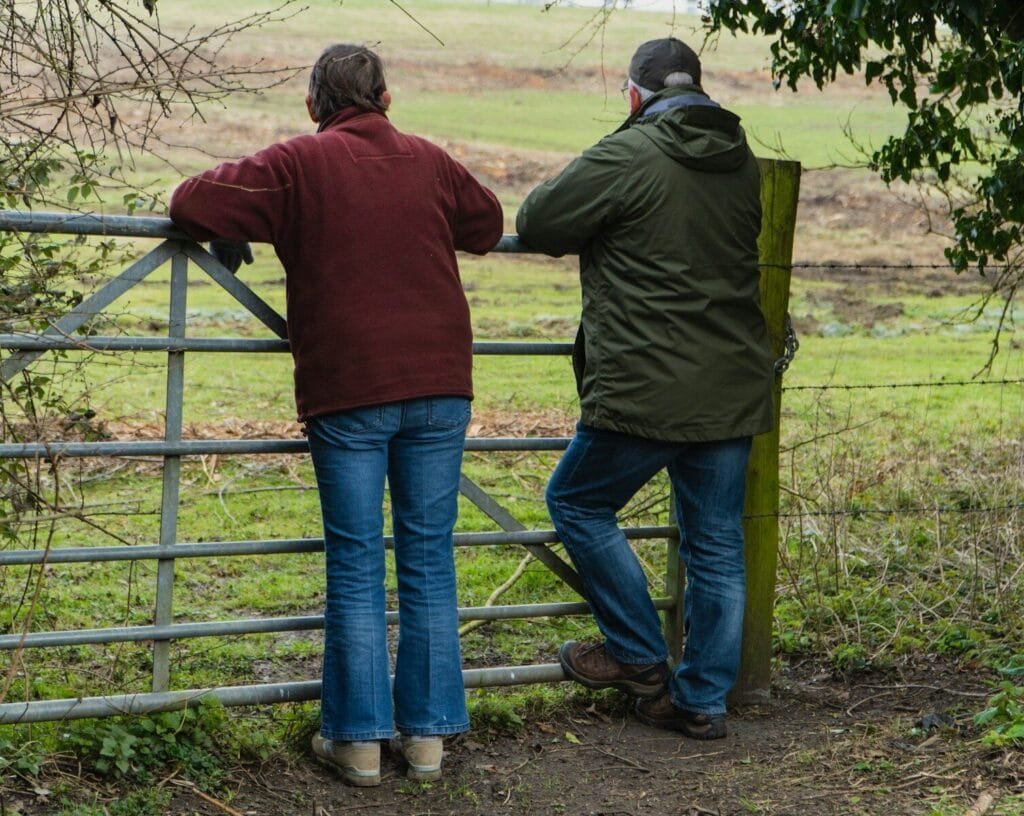
- They’re leaning against the gate.

- The waves are crashing against the rocks.
d. Use "against" for contrasts
It can be useful to create comparisons in order to see something or understand something more clearly. In this case, here are some examples of how “against” might be used
- That tall building really stands out against those other, smaller buildings.
- The green couch does not look good against the pink chair.
- Against a hazy, cloudy sky it’s hard to see the birds that are flying overhead.
- Putting black against yellow creates a strong contrast in colors.
d. Use "against" for contrasts

- The darkness of the field stands out against a dusky sunset.